 Skip to content
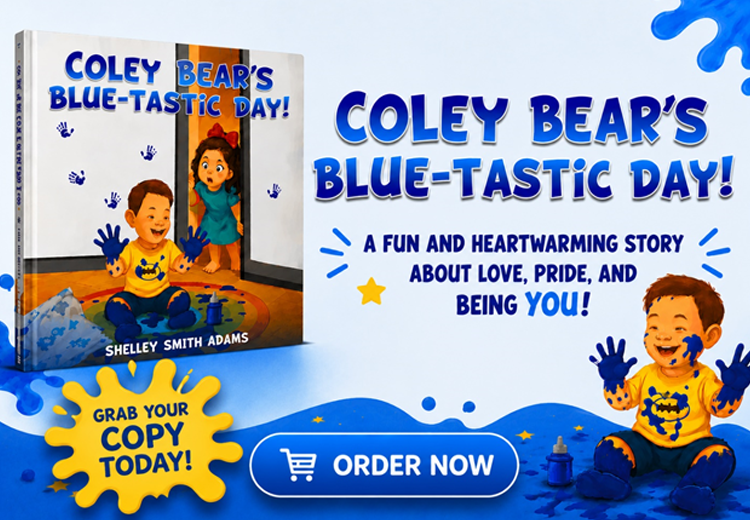

Children’s literature has the power to shape young minds, build empathy, and foster understanding across differences. When it comes to children’s Down syndrome books, the impact is even more profound. These stories serve as windows into experiences that may differ from a child’s own, while also acting as mirrors for children who see themselves reflected in the pages. Coley Bear’s Blue-Tastic Day! by Shelley Smith Adams is a shining example of how a simple, joyful story can promote friendship and understanding among young readers. This heartwarming tale, based on a true story about the author’s son Cole, demonstrates that a little mess can be a beautiful expression of fun and that family love transcends all differences.
The importance of Down syndrome books cannot be overstated in today’s diverse world. They provide opportunities for conversations about inclusion, acceptance, and the beauty of neurodiversity. Through Cole’s creative adventure, children learn valuable lessons about looking beyond unexpected behavior, recognizing happiness in others, and responding with encouragement rather than criticism. This blog explores how Coley Bear’s Blue-Tastic Day! and similar children’s books play a crucial role in promoting friendship and understanding among young readers.
How Children’s Stories Help Build Friendship and Understanding
Stories have always been humanity’s most powerful tool for transmitting values, building empathy, and creating connections between people. For young children, picture books serve as their first introduction to worlds beyond their immediate experience, offering safe spaces to explore emotions, relationships, and social dynamics. When parents and educators seek out Down syndrome books, they are providing children with opportunities to understand that differences are not barriers to friendship but rather enrich our shared human experience.
Research consistently shows that children who are exposed to diverse literature develop greater empathy and social awareness. This type of literature specifically helps young readers recognize that children with Down syndrome share the same desires for fun, friendship, and acceptance as anyone else. Through engaging narratives and relatable characters, these stories break down misconceptions and build bridges of understanding.
The best children’s Down syndrome books 2026 available today, including Coley Bear’s Blue-Tastic Day!, focus on universal childhood experiences rather than highlighting differences. By showing children with Down syndrome engaging in everyday activities, such as playing, creating, and interacting with family, these books normalize inclusion and teach children that friendship knows no boundaries.
Why Friendship and Understanding Matter in Children’s Development
Friendship and understanding are foundational pillars of healthy child development. Children who learn to form meaningful connections with others develop stronger self-esteem, better emotional regulation, and greater resilience in the face of challenges. Children’s Down syndrome books play a vital role in this developmental process by modeling positive social interactions and teaching children how to navigate relationships with empathy and respect, such as:
1. Helping Children Recognize Other People’s Feelings
One of the most important skills children develop through reading is emotional recognition, the ability to identify and understand feelings in themselves and others. In Coley Bear’s Blue-Tastic Day!, young readers witness a range of emotions: Cole’s pure joy as he paints, Ryleigh’s surprise when she discovers her blue-covered brother, Mom’s initial shock that transforms into a smile, and the family’s collective amusement at the situation.
Down syndrome storybooks for young readers like Cole’s story excel at presenting emotions in ways children can easily grasp. When children see Cole’s beaming face on page 17, covered head to toe in blue paint, they recognize happiness without needing it explained. When they observe Ryleigh’s wide eyes on page 19, they understand surprise. These visual cues help children develop emotional literacy, a crucial component of friendship-building.
2. Teaching Kindness Through Everyday Interactions
Kindness is not an abstract concept; it is built through daily interactions and small moments of understanding. Books demonstrate kindness in action, showing young readers how to respond to others with compassion and patience. In Coley Bear’s Blue-Tastic Day!, kindness manifests in multiple ways: Mom choosing to smile at Cole’s artwork despite the ruined sofa, Ryleigh fetching a towel for her brother, and the family working together to restore order.
Parents searching for the best Down syndrome books in 2026 should look for stories that show kindness as a natural, everyday occurrence rather than a grand gesture. When children see characters treating each other with warmth and understanding, they internalize these behaviors and apply them to their own relationships.
3. Understanding That Everyone Has Different Interests
Every child is unique, with their own preferences, talents, and ways of expressing themselves. Down syndrome books celebrate this individuality by showing characters who pursue their own interests and passions. Cole’s love of blue paint and his enthusiastic approach to art demonstrate that children with Down syndrome have rich inner lives and distinct personalities.
When children read Down syndrome books, they learn that differences in interests and abilities are not obstacles to friendship but opportunities for learning and growth. Cole’s painting adventure shows that what might seem messy or unusual to one person is a source of immense joy to another.
How Coley Bear’s Blue-Tastic Day! Presents Positive Family Relationships
Family relationships form the foundation of a child’s social development, providing the first model for how people interact with, support, and care for one another. Coley Bear’s Blue-Tastic Day! by Shelley Smith Adams presents a heartwarming portrait of family life that celebrates each member’s unique contributions while emphasizing unconditional love and acceptance.
1. Cole’s Creative Adventure and His Excitement
Cole’s journey from watching his favorite cartoon to becoming covered in blue fingerpaint is a masterclass in childhood curiosity and enthusiasm. The story captures the pure, unfiltered joy that children experience when they engage in creative play. On page 14, the text describes how Cole “dipped ONE finger in. Then TWO. Then his WHOLE HAND,” building anticipation and showing his escalating excitement.
For parents who buy children’s books about Down syndrome, seeing Cole’s enthusiastic approach to painting provides insight into the rich sensory experiences that children with Down syndrome often enjoy. The detailed illustrations show Cole’s expressions of delight as he covers himself in blue paint, reminding readers that children with Down syndrome experience joy just as deeply and authentically as any other child.
2. Ryleigh’s Surprise When She Discovers Cole
Ryleigh’s discovery of her blue-covered brother on page 18 provides a realistic portrayal of sibling dynamics. Her shocked exclamation, “COLE IS BLUE!” captures the genuine surprise of finding a sibling in an unexpected situation. The illustration on page 19 shows Ryleigh peering into the room with wide eyes and an open mouth, a reaction that any sibling can relate to.
Children’s Down syndrome books often struggle with how to present siblings of children with Down syndrome; they are sometimes portrayed as overly responsible or saintly. Ryleigh’s authentic reaction of surprise followed by her quick adaptation to help demonstrates a healthier, more realistic sibling relationship. She is neither burdened nor idealized; she is simply a sister responding to an unusual situation with honesty and ultimately, love.
3. Ryleigh’s Encouragement at the End of the Story
Perhaps the most touching moment in Coley Bear’s Blue-Tastic Day! comes when Cole asks his sister, “Good job?” On page 26, Ryleigh responds with a smile: “Yes, Cole, you did a good job, but maybe next time, let’s paint on paper!” This exchange perfectly encapsulates the book’s message about encouragement and gentle guidance.
For families considering buying children’s books, this scene demonstrates how siblings can support and encourage each other while still offering practical advice. Ryleigh validates Cole’s creative effort while also suggesting a more appropriate outlet for his artistic talents. This balance of affirmation and guidance is a powerful lesson in how to support someone with different needs without diminishing their achievements.
What Children Can Learn About Understanding Others from Cole’s Story
The lessons embedded in Coley Bear’s Blue-Tastic Day! extend far beyond the story’s pages, offering children practical guidance for understanding and interacting with others. Through Cole’s experiences, young readers learn valuable principles that apply to all their relationships. Some are given below:
1. Looking Beyond Unexpected Behavior
When children encounter behavior they do not understand, whether it is a classmate acting differently, a sibling making unusual choices, or a friend expressing themselves in unfamiliar ways, children’s Down syndrome books teach them to look beyond surface behaviors to understand the person underneath. Cole’s blue-covered appearance might seem strange at first glance, but his joy and pride are unmistakable when one looks beyond the mess.
The book encourages children to ask questions rather than make assumptions. Why is Cole blue? Because he loves blue paint and wanted to create art with his whole body. Understanding this motivation transforms a seemingly chaotic scene into a story of creative expression and joyful exploration.
2. Recognizing Happiness and Personal Achievements
Page 20 describes how Mom saw that “the smile on Cole’s face and the pride in his eyes only made her smile.” This moment captures a crucial lesson: recognizing and celebrating another person’s happiness, even when it comes from an unexpected source. Down syndrome books like this one teach children to value others’ joy as a legitimate achievement.
Cole’s pride in his artwork is genuine and deserving of recognition. The book validates that creating something, even if it is a messy sofa covered in blue paint, is worth celebrating. Children learn that personal achievement looks different for everyone and that happiness should be recognized and honored.
3. Responding with Encouragement Instead of Criticism
The most powerful lesson from Coley Bear’s Blue-Tastic Day! is how the family responds to Cole’s creative adventure. Rather than criticism or punishment, Mom offers a bath and a smile. Ryleigh offers a towel and gentle advice. Even the unseen father contributes by cleaning the sofa without complaint.
When families buy children’s books, they are equipping their children with tools for responding to unexpected behavior with grace and understanding. The book demonstrates that encouragement builds confidence, while criticism can silence expression and joy. Children learn that when someone they care about makes a mistake or behaves unexpectedly, the most helpful response is kindness.
The Importance of Positive Representation in Children’s Relationships
Positive representation matters. When children see themselves and others accurately and respectfully portrayed in literature, they develop healthier self-concepts and more accepting attitudes toward diversity. Children’s Down syndrome books play a critical role in ensuring that children with Down syndrome are represented as complex, joyful individuals rather than as disabilities or challenges, such as:
1. Showing Children with Down Syndrome as Individuals
One of the greatest strengths of Coley Bear’s Blue-Tastic Day! is that Cole is presented as a complete individual, a boy with preferences (blue paint), relationships (sister Ryleigh, Mom, Dad), and dreams (creating art like his favorite cartoon character). He is not defined by Down syndrome; he is defined by his personality, interests, and family bonds.
Parents seeking the best children’s Down syndrome books 2026 should prioritize stories like this one that show children with Down syndrome as multifaceted individuals. When children see characters with Down syndrome engaging in typical childhood activities and expressing distinct personalities, they develop a more nuanced understanding of what Down syndrome means, and what it does not mean.
2. Exploring Shared Childhood Experiences
Despite differences in abilities or appearances, all children share common experiences: wanting to play, seeking love and approval, experiencing joy and frustration, and learning to navigate their world. Coley Bear’s Blue-Tastic Day! emphasizes these shared experiences by focusing on a universal scenario: a child getting into something messy.
Children’s Down syndrome books that highlight commonalities help build bridges between children of all abilities. Readers can easily relate to Cole’s excitement about painting, his desire to imitate what he saw on TV, and his pride in his creation. These shared experiences create natural connection points and teach children that friendship and understanding are possible when we focus on what we have in common.
3. Encouraging Acceptance Without Creating Stereotypes
Creating books that promote acceptance without falling into stereotypes is a delicate balance. Coley Bear’s Blue-Tastic Day! achieves this by presenting Cole’s story with authenticity and warmth, without reducing him to a symbol or a teaching tool. He is a real boy (the story is based on the author’s actual son) who made a real mess, and his family’s reaction is depicted honestly.
When educators and parents use Down syndrome storybooks, they should look for stories that avoid stereotyping children with Down syndrome as either perpetually happy or as objects of pity. Cole experiences the full range of childhood emotions, such as excitement, pride, and curiosity, making him a relatable and authentic character.
How Parents Can Use Books to Encourage Better Relationships
Parents play a crucial part in helping children extract meaning and lessons from the books they read together. Children’s Down syndrome books like Coley Bear’s Blue-Tastic Day! offer numerous opportunities for meaningful conversations, such as:
1. Discussing Characters’ Emotions During Storytime
During shared reading experiences, parents can pause to ask questions about characters’ feelings. When Cole discovers the fingerpaint, how does he feel? When Ryleigh finds her blue brother, what emotions might she be experiencing? When Mom sees the mess, what might she be thinking? These conversations help children develop emotional vocabulary and perspective-taking skills.
Parents who buy children’s books can use moments like Cole’s proud smile on page 17 to discuss how recognizing others’ happiness is an important part of friendship. Asking children to interpret characters’ expressions and body language develops empathy and social awareness.
2. Talking About Sibling Support and Cooperation
Ryleigh’s role in the story provides excellent material for discussions about sibling relationships. Parents can ask their children: How did Ryleigh help Cole? Why do you think she chose to help instead of getting angry? What would you do if your sibling made a mess like Cole did?
These conversations help children understand that family members support each other even in difficult or messy situations. Parents of children with siblings who have Down syndrome can particularly benefit from using these discussions to help typically developing children process their own feelings about their sibling relationships.
3. Encouraging Children to Respect Different Interests
Cole’s passionate love of blue paint demonstrates that everyone has unique preferences and interests. Parents can use this aspect of the story to discuss with children that different people like different things, and that respecting others’ interests is important for friendship.
For families interested in children’s books, Coley Bear’s Blue-Tastic Day! offers a gentle way to introduce conversations about individual differences without making them feel heavy or didactic. Cole’s interests are presented as natural and valid, encouraging children to approach differences with curiosity rather than judgment.
Activities That Help Children Practice Friendship and Understanding
Reading is just the beginning; children learn best when they can apply lessons from books through hands-on activities. Here are some engaging activities that extend the lessons from Coley Bear’s Blue-Tastic Day! into everyday practice:
- Finger Painting Fun: Like Cole, let children explore finger painting with appropriate materials and boundaries. Use this activity to discuss Cole’s story and reinforce that creativity is valuable, even when it gets messy. Set up a designated painting area with paper and washable paints, then talk about Cole’s choices and what children might do differently.
- Emotion Charades: Print images from the book showing different emotions (Cole’s joy, Ryleigh’s surprise, Mom’s smile) and play a guessing game where children identify each feeling. This builds emotional vocabulary and helps children recognize emotions in others.
- Thank You for Helping: Encourage children to notice and thank family members for their help and support. This could be a sibling who shared a toy, a parent who made dinner, or a grandparent who read a story. This practice reinforces the family cooperation seen in Cole’s story.
- My Special Interests Collage: Help children create a collage representing their favorite things, similar to how blue is Cole’s favorite color. Discuss how everyone has unique interests and how learning about others’ interests helps us understand them better.
- Clean-Up Cooperation: After messy play, involve children in cleaning up together. This mirrors the family’s response in Coley Bear’s Blue-Tastic Day! and reinforces that taking care of shared spaces is a team effort.
Important Lessons About Friendship and Understanding from Coley’s Story
Coley Bear’s Blue-Tastic Day! by Shelley Smith Adams offers children timeless lessons that extend far beyond the story’s playful premise. When parents and educators buy children’s books about Down syndrome like this one, they provide children with a foundation for building meaningful, accepting relationships throughout their lives.
Lesson 1: Joy is Worth Celebrating, Even When It Comes with a Mess: Cole’s happiness is valid and worthy of recognition. Children learn that relationships are built on recognizing and celebrating others’ joy, not just managing their behavior.
Lesson 2: Family Members Support Each Other: From Mom’s understanding smile to Ryleigh’s towel to Dad’s cleaning efforts, the story demonstrates that families work together through challenges.
Lesson 3: Different Perspectives Can Be Beautiful: What looks like chaos to one person might be art to another. Children learn to appreciate different ways of seeing and experiencing the world.
Lesson 4: Encouragement Matters More Than Criticism: Ryleigh’s “Good job, but maybe next time paint on paper” encapsulates the perfect balance of affirmation and guidance.
Lesson 5: Everyone Has Something to Teach Us: Cole teaches his family about joy, creativity, and enthusiasm. Children learn that everyone, regardless of ability, brings unique gifts to relationships.
Conclusion
The role of children’s Down syndrome books in promoting friendship and understanding cannot be underestimated. Through engaging stories like Coley Bear’s Blue-Tastic Day! by Shelley Smith Adams, children learn essential lessons about empathy, acceptance, and the beauty of neurodiversity. These books serve as powerful tools for parents and educators who wish to raise children who value inclusion and embrace differences.
Coley Bear’s Blue-Tastic Day! exemplifies everything these stories should be: joyful, authentic, and focused on universal childhood experiences. Cole’s story is primarily about a little boy who loves blue paint and has a family who loves him. This emphasis on commonalities over differences is precisely what makes the book so effective at promoting understanding.
For those looking for an excellent starting point for conversations about acceptance, family support, and the joy of childhood, Coley Bear’s Blue-Tastic Day! stands as a model of how to represent diversity with warmth, honesty, and celebration.
When children read stories like this one, they learn that friendship and understanding are built on seeing the whole person, not just their abilities or challenges. In a world that too often fears differences, Coley Bear’s Blue-Tastic Day! invites readers of all ages to remember that sometimes, the most beautiful expressions of joy come in the messiest forms.
Frequently Asked Questions
Where does Cole find the finger paint?
Cole tiptoes over to the craft cabinet in the room and spots the finger paint. He grabs the bottles from the shelf and carries them back to the sofa.
Which colors are named before Cole picks blue?
Before choosing his favorite, the book names Red, Yellow, and Green. Cole then grabs the blue paint and happily tiptoes back to the sofa.
How does Cole spread the paint on his arms and legs?
He giggles as he pats the paint onto his arms and smooths it on his legs. The text compares his movements to spreading soap over his skin.
What words describe the paint as Cole plays with it?
The paint is described with the action words “Drip,” “Smear,” and “SPLAT!” Cole is also described as turning “BLUER and BLUER by the second.”
What happens after Mom takes Cole to have a bath?
Cole takes a bubbly bath while Ryleigh holds a towel and giggles. The story ends with Daddy scrubbing the blue paint off the sofa.
Want to start a conversation about acceptance and friendship with your child? Buy your copy of Coley Bear’s Blue-Tastic Day! by Shelley Smith Adams from Amazon and use Cole’s true story to teach kindness, understanding, and the joy of embracing differences.


