Skip to content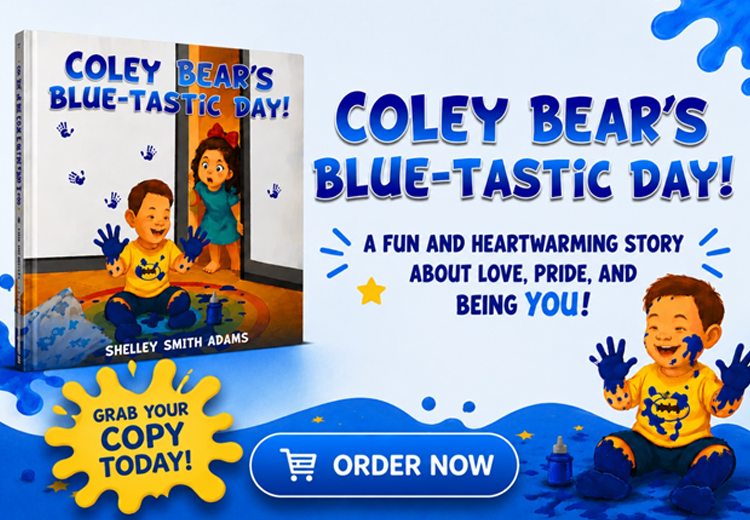
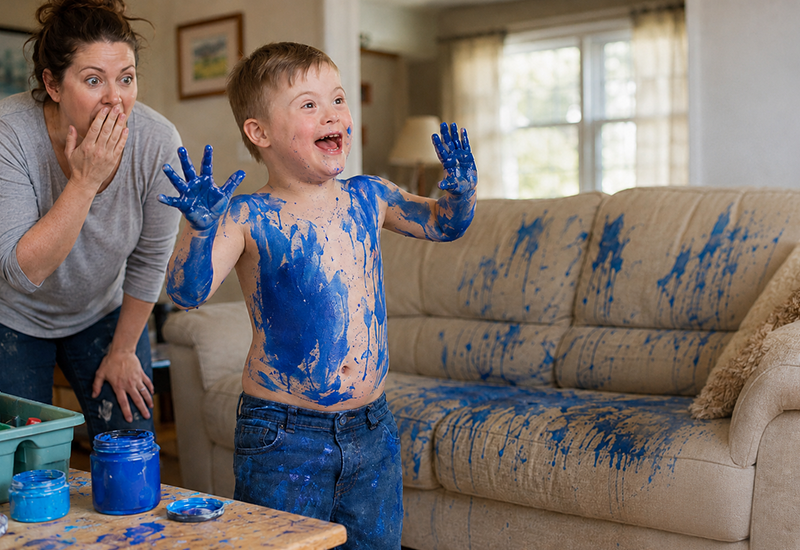
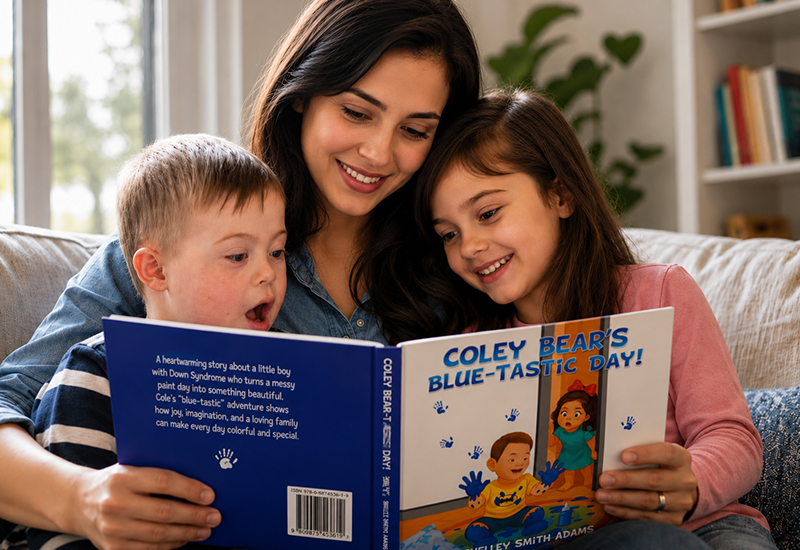
Every parent knows the moment: a few minutes of unexpected quiet, followed by a discovery that stops time. For one real-life mom, that moment arrived when her son Cole turned himself entirely blue. What started as a quiet morning watching cartoons became an unforgettable scene of drips, smears, and giggles. Based on Shelley Smith Adams heartwarming book Coley Bear’s Blue-tastic Day!, this true story follows a little boy who sees a character painting on TV and decides to use his own body as the canvas. He sneaks to the craft cabinet, grabs his favorite color—blue—and turns himself “bluer and bluer by the second.”
His sister Ryleigh discovers him first, her eyes going wide as she calls for their mom. When Mom arrives, she freezes. The sofa is covered. Cole is blue. But instead of reacting with frustration, she looks at his proud smile and chooses joy. This funny family story for children reminds us that childhood discovery often comes with mess—and that is perfectly okay. In this article, we will explore how family stories boost imagination, why funny moments help kids learn, and the lasting benefits of reading adventure stories to children. Grab your imaginary paintbrush and dive into Cole’s blue paint adventure.
Why Cole’s Blue Paint Adventure Is the Ultimate Kids’ Painting Adventure
Cole watches his favorite cartoon character paint on TV. Inspired, he tiptoes to the craft cabinet and grabs the blue finger paint. He dips one finger in, then two, then his whole hand. Drip. Smear. Splat. Cole turns bluer by the second. His sister Ryleigh calls their mom, who freezes at the messy sofa and blue child. But instead of yelling, Mom looks at Cole’s proud face. He yells, “Blue!” She replies, “Blue, you got the color right!”
This is the essence of a kids’ painting adventure—unplanned, unstructured, and utterly delightful. There are no rules or paper boundaries, only a child’s pure desire to create. When Cole’s mother validates his choice, she turns a potential punishment into a connection. Cole chose the color, the canvas (himself), and the technique. His mother validated every choice. That creative liberty is rare but essential. When children feel safe to explore, they take risks, learn, and grow. The story ends with a joyful bath and Ryleigh’s gentle suggestion: “Maybe next time, let’s paint on paper!”
Three Ways Funny Family Stories Help Children Grow
Funny family stories like Coley Bear’s Blue-tastic Day! are not just entertaining. They are educational tools that shape how children see themselves and the world. Below, we answer three key questions about the power of humorous, family-centered storytelling:
1. How Do Family Stories Improve Imagination?
Family stories turn ordinary events into extraordinary possibilities. When Cole watches a cartoon character paint, he imagines himself painting too—then makes it real. Reading a children’s creativity story like this encourages kids to ask, “What if?” Familiar settings, like a living room, make imagination feel safe. When children hear, “Cole painted himself blue,” they think, “I could do that too.” And creativity begins.
2. How Can Funny Stories Help Children Learn?
Funny stories lower emotional stakes. Humor releases dopamine, enhancing memory and focus. Cole turning blue is funny—drips, smears, and a proud “Blue!” invite laughter. This children’s funny story teaches color identification, cause and effect, and social cues without lectures. Even bath time becomes positive: “Let’s go take a bath!” “YAY!” Mistakes become cleanup opportunities, learning, and shared laughter.
3. What Are the Benefits of Reading Adventure Stories to Kids?
Adventure stories build resilience, empathy, and problem-solving skills. In Cole’s blue paint adventure, Mom chooses empathy over anger, and Ryleigh offers gentle feedback. Heartwarming stories for child development prepare kids for surprises—they learn that adults may respond with love, siblings can be allies, and messes can end with hugs. The journey matters more than the destination. Joy is the real masterpiece.
How This Story Fits into Art and Creativity Stories
Coley Bear’s Blue-tastic Day! shows that true childhood creativity is messy, spontaneous, and unpredictable. Using his body as a canvas, Cole proves art is about process, not product—the sensation, the joy, the making. This book belongs alongside great art and creativity stories that celebrate process over perfection, and below are the key reasons why:
1. Why Messy Play Is Essential for Development
When Cole smears blue paint on his legs, he engages in sensory play. Messy play builds neural connections, improving fine motor skills and cognitive flexibility. Mom smiles because she recognizes Cole is not being naughty—he is being an artist. That distinction changes everything.
2. How Cole’s Blue Paint Adventure Inspires Young Artists
Coley Bear’s Blue-tastic Day! permits children to explore art on their own terms. There is no right way to paint or wrong canvas—only the joy of creating. The book encourages fearless expression, inviting every child to pick a color, make a mess, and feel proud.
3. Turning Everyday Chaos into a Children’s Creativity Story
Every family can create a children’s creativity story. Cole’s mother chose to see his pride, not the ruined sofa. “Blue, you got the color right!” transformed disaster into memory. Parents can choose discovery over mess. That choice makes every chaos a story worth telling.
What Parents Can Learn from Coley Bear’s Blue-tastic Day!
Parents often feel pressure to keep homes clean, schedules tight, and behavior perfect. Coley Bear’s Blue-tastic Day! offers a different path. When Cole’s mother saw the blue sofa, she felt like crying. But she looked at Cole’s smile and chose differently. That choice is the heart of this funny family story for children. It teaches parents that connection is more important than correction. Here are three takeaways for every parent:
- Pause before reacting:Mom froze for a minute. That pause allowed her to shift from frustration to love.
- Validate the child’s effort:“Blue, you got the color right!” focuses on what Cole did well, not what he ruined.
- Involve siblings kindly:Ryleigh could have tattled or mocked. Instead, she later said, “Yes, Cole, you did a good job, but maybe next time, let’s paint on paper!” That is gentle guidance, not shame.
The book ends with, “Thank goodness for Daddy.” That small line reminds parents that raising creative, messy children is a team effort. No one parent has to handle the blue paint alone. Like educational stories that teach patience, this tale shows that waiting, breathing, and responding with love turn chaos into connection.
Conclusion
Cole’s blue paint adventure is more than a funny story about a messy toddler. It is a blueprint for raising creative, confident, and resilient children. Through this kids’ painting adventure, we learn that imagination thrives when children feel safe to explore. We learn that humor turns mistakes into memories. And we learn that adventure stories build skills that last a lifetime. Shelley Smith Adams wrote this book for her son Cole, who has Down Syndrome and sees the world in a wonderfully unique way. But the message is universal. Every child deserves the freedom to paint outside the lines—even if the canvas is their own arms. So next time you hear quiet giggles from the next room, take a deep breath. Grab your camera. And remember: blue paint washes off. Childhood joy does not.