Skip to content
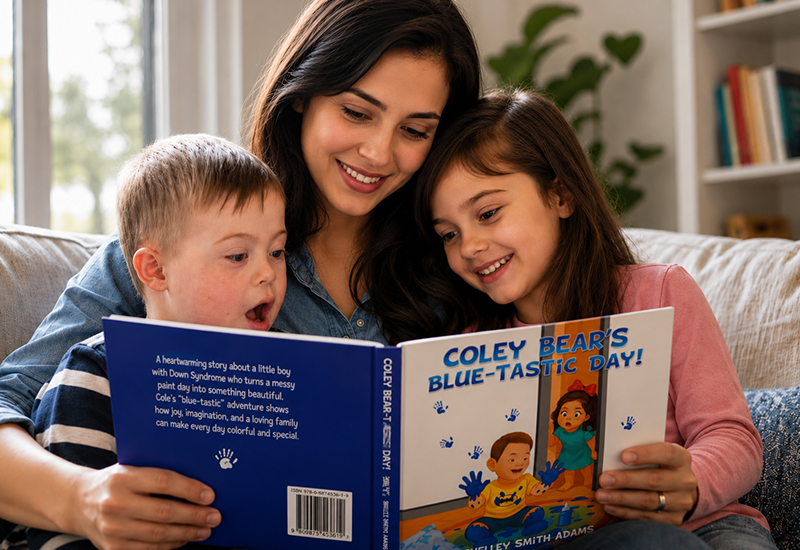
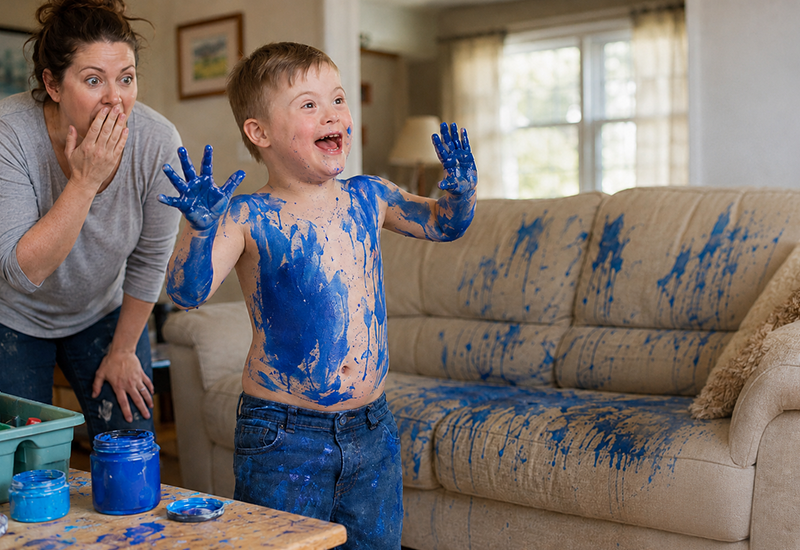
There is a moment every parent knows too well—the sudden silence from the other room, followed by the unmistakable sound of something going very wrong. For most parents, that moment triggers panic. But for Shelley Smith Adams, the author of Coley Bear’s Blue-tastic Day!, that moment became something entirely different: a beautiful story. When her son Cole, who has Down Syndrome and sees the world in wonderfully unique ways, decided to turn himself into a living canvas with blue fingerpaint, she faced a choice. She could cry over the ruined sofa, or she could smile at the pride beaming from her son’s face. She chose the smile. That choice became a children’s book that perfectly represents the best family and parenting stories for children in 2026—tales that do not hide the mess but celebrate the joy beneath it. In a year when parents are hungry for authenticity over perfection, this true story offers a refreshing, heart-expanding reminder that love looks better than any clean sofa ever could.
What Makes the Best Family and Parenting Stories for Children?
The best stories for children share several key qualities. First, they feature relatable family dynamics that feel real rather than manufactured. Second, they embrace emotional honesty, showing parents and children making mistakes, laughing, and choosing connection over correction. Third, they deliver gentle life lessons without ever becoming preachy. Coley Bear’s Blue-tastic Day! excels in all three areas. The family in this book is not a perfectly polished version of parenthood. It is a real family with a curious boy, a surprised sister named Ryleigh, a mom who freezes in shock, and a dad who gets a thankful mention for cleanup duty. This is what makes great family stories for children—they do not pretend parenting is easy. Instead, they show how love operates inside the chaos.
A Look at Coley Bear’s Blue-tastic Day!
At first glance, Coley Bear’s Blue-tastic Day! by Shelley Smith Adams appears to be a simple, funny tale about a boy who paints himself blue. But beneath the giggles and the glorious mess lies something much deeper. This book belongs to a special category of children’s stories about patience and creativity because it teaches both virtues without ever using those big words. Patience appears in small but powerful moments—Cole dipping one finger into the paint, then two, then his whole hand instead of dumping the bottle, and Mom freezing for a full minute before choosing to smile instead of cry.
Creativity explodes on every page, from Cole using his own body as a canvas to Mom validating his color choice before addressing the ruined sofa. The book shows that patience is not about waiting quietly; it is about pausing long enough to choose love over frustration. And creativity is not about producing perfect artwork; it is about the joyful freedom to explore, make mistakes, and still be celebrated. By weaving these two essential life skills into a true, heartwarming family story, this book offers parents and children a shared language for talking about how to slow down, mess up, and grow together.
Heartwarming Children’s Stories That Teach Life Lessons
There is a special category of literature that parents return to again and again, not because the plots are complex, but because the stories simply make everyone feel warmer inside. These heartwarming children’s stories play a crucial role in early childhood development. Some lessons are given below:
1. Best Family and Parenting Stories for Children Teaches That Mistakes Are Not Catastrophes
One of the most valuable life lessons any child can learn is that making a mistake does not mean losing love. In Coley Bear’s Blue-tastic Day!, Cole’s “mistake” of painting himself blue from head to toe becomes a cherished family memory rather than a disaster. When Mom freezes and wants to cry, she chooses to smile at Cole’s pride instead. This teaches young readers that errors are opportunities for connection, not punishment. Children who internalize this lesson grow up with healthier risk-taking abilities and less fear of failure. This is exactly what the best family and parenting books aim to accomplish.
2. Sibling Interactions Build Emotional Intelligence
The relationship between Cole and his sister Ryleigh offers another powerful life lesson. When Ryleigh discovers Cole covered in blue paint, she does not yell or tattle. She simply calls for Mom with curiosity and amazement. Later, when Cole asks, “Good job?”, Ryleigh replies with a smile, “Yes, Cole, you did a good job, but maybe next time, let’s paint on paper!” This moment models a gentle correction wrapped in affirmation. Young readers learn that siblings can be allies who offer kind guidance rather than criticism.
3. Parental Responses Shape a Child’s Self-Worth
Mom’s reaction to the blue mess is the emotional heart of this heartwarming children’s story. The text explicitly says she wanted to cry at the ruined sofa, but the smile on Cole’s face and the pride in his eyes made her smile instead. That single moment teaches children that their joy matters more than their messes. It teaches parents that pausing before reacting changes everything. This is what makes great parenting stories for kids so powerful—they model the kind of response every child deserves, and every parent aspires to give.
4. Playful Consequences Make Learning Fun
After Mom decides to smile instead of cry, she says, “C’mon, Cole, let’s go take a bath!” Cole responds with an enthusiastic “YAY!” The bath is not presented as punishment but as a continuation of the adventure. This teaches children that cleanup can be part of the fun, not a dreaded chore. It also models for parents how to turn potentially frustrating moments into playful interactions. The book ends with “Thank goodness for Daddy,” implying that the whole family participates in both the mess and the cleanup.
Why Family Stories Build Stronger Values Than Rules Alone
Parents often wonder whether it is better to simply tell children the rules or to read them stories that illustrate those rules. Research and experience both suggest that family stories for children are far more effective than rules alone. A rule like “don’t make a mess” is easily forgotten or resisted. But a story about a boy who made a beautiful blue mess and was still loved deeply—that story sticks. When children hear Coley Bear’s Blue-tastic Day!, they are not being lectured about patience or creativity. They are experiencing those virtues through Cole’s adventure and Mom’s loving response. The values become part of the child’s emotional memory, not just a list of commands. This is why life lesson stories for children outperform sticker charts and time-outs when it comes to building lasting character. A rule controls behavior temporarily. A story transforms the heart permanently. For parents looking for funny family stories for children that also deliver deep value, this book offers the perfect combination of laughter and lasting impact.
Life Lesson Stories for Children: What Coley Bear Teaches About Patience and Creativity
Among the many reasons to seek out life lesson stories for children, two qualities stand out as particularly valuable for 2026 families: patience and creativity. In a world of instant entertainment, children’s attention spans have become a growing concern. Creativity—the willingness to experiment and make mistakes—is increasingly undervalued in test-score-driven environments. Coley Bear’s Blue-tastic Day! addresses both qualities with remarkable subtlety and effectiveness.
1. Patience Through the One-Finger-at-a-Time Progression
The book shows patience in a beautifully simple way. After Cole gets the paint open, the text says, “He dipped ONE finger in. Then TWO. Then his WHOLE HAND.” That progression—one finger, two fingers, whole hand—is a small but meaningful demonstration of patience. Cole does not dump the entire bottle. He explores gradually, savoring each stage of the sensory experience. For young readers, this sequence models how to approach a new activity with curiosity rather than chaos. This is exactly what the best family and parenting stories for children do—they teach virtues through action rather than lecture.
2. Patience Through Mom’s Pause Before Reacting
Perhaps the most important lesson in patience comes from Mom herself. When she sees the blue sofa and the blue child, the text says, “She froze for a minute.” That frozen moment is patience in action. She does not scream. She does not grab Cole. She pauses. That pause allows her to shift from frustration to love. Children watching this scene absorb the value of pausing before reacting. Parents reading it are reminded that a single breath can change everything. These are parenting stories for kids at their most useful—teaching both the child and the adult simultaneously.
3. Creativity Through Using the Body as a Canvas
Cole’s creativity is pure and unselfconscious. He does not ask for permission or worry about doing it wrong. He simply paints himself blue with joyful abandon. The text says he “smoothed it on his legs like soap” and turned “bluer and bluer by the second.” There is no fear, no self-doubt, no concern about the mess. That is the kind of creativity parents hope to preserve—the willingness to experiment before the world teaches children to self-censor. Life lesson stories for children like this one remind families that creativity is not about producing perfect artwork; it is about the joy of making.
4. Creativity Through Mom’s Validation of the Color Choice
Mom’s response to the blue disaster is the key that unlocks the book’s creative message. She does not say, “Look at this mess!” Instead, when Cole yells “Blue,” she quickly replies, “Blue, you got the color right!” She validates his cognitive achievement before addressing anything else. That validation tells Cole—and every child reading the book—that getting the idea right matters more than keeping the sofa clean. For families seeking children’s stories, this book delivers both in equal measure, wrapped in a true story that feels both specific and universal.
Questionnaire: How Parenting Stories Shape Child Development
1. How do parenting stories teach life lessons?
Parenting stories teach life lessons through modeling—children watch characters make choices and absorb the consequences. In Coley Bear, Mom’s choice to smile instead of cry models emotional regulation and grace.
2. Why moral stories matter for child development
Moral stories build empathy by placing children inside another person’s experience and showing multiple perspectives. They teach that morality is about relationships, not just following rules.
3. How family stories strengthen values in children
Family stories for children strengthen values through repetition and emotional association—each reading reinforces patience, creativity, and unconditional love. These values become internalized neural pathways.
4. What life lessons can children learn from storytelling?
Children learn that mistakes are not catastrophes, adults can be surprised and still respond with love, and asking for affirmation is healthy. These are the hallmarks of children’s books about family love.
Conclusion
The number of books on the shelf does not measure a family library. It is built moment by moment, read-aloud by read-aloud, laugh by shared laugh. The best family and parenting stories for children are the ones families return to, not because they have to, but because they want to. Coley Bear’s Blue-tastic Day! by Shelley Smith Adams deserves that place. It is based on a true story about a real boy who painted himself blue and a mother who chose joy over frustration. It features a child with Down Syndrome, broadening representation without making diagnosis the point.
It centers on a mother’s loving choice, validating the difficult work of parenting. And it ends with a bath and a giggle, reminding everyone that even the messiest moments can become the sweetest memories. The final line—”Thank goodness for Daddy.”—is a small masterpiece of understatement, acknowledging that parenting is a team effort. As you build your family library in 2026, seek out heartwarming children’s stories that make you laugh even as they make you think. Seek out life lesson stories for children that teach through delight. And remember: sometimes a little mess is just blue-tastic love in disguise. Cole got the color right. And so did this book.