 Skip to content
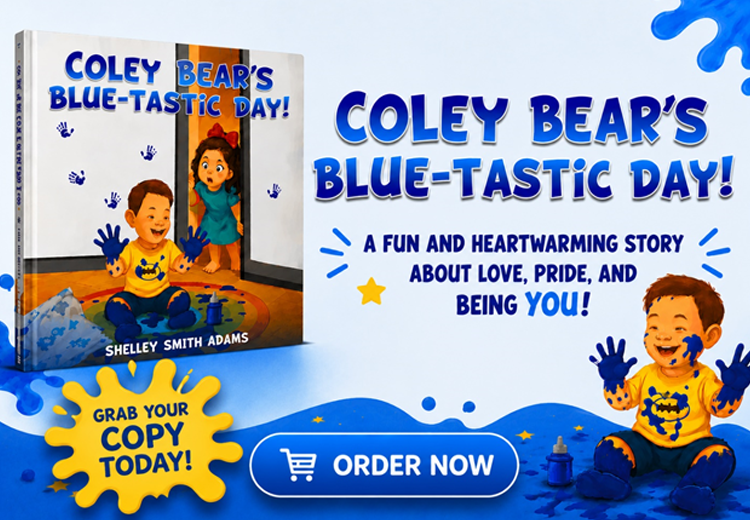

Every classroom is a mosaic of unique learners, and finding the right stories to reflect that diversity is one of the most rewarding challenges a teacher faces. Down syndrome picture books for teachers offer a powerful way to build empathy, spark creativity, and celebrate the joyful individuality of every child. One standout example is Coley Bear’s Blue-Tastic Day! by Shelley Smith Adams, a vibrant, true story about a young boy with Down Syndrome who turns a quiet morning into a messy, blue-splattered masterpiece. This book is not just a delightful read-aloud; it is a Down syndrome awareness book for children’s with hands-on activities, crafts, and conversations that can transform your classroom into a more inclusive and creative space. In this blog, we will explore why this book matters, how its themes connect to learning, and a wealth of practical activities you can bring to your students tomorrow.
Why Bringing Children’s Stories into the Classroom Matters
Stories are the heartbeat of early childhood education. When children see themselves and their peers reflected in the pages of a book, they feel valued and understood. Bringing diverse stories into the classroom goes beyond literacy; it builds community, fosters emotional intelligence, and opens doors to conversations about differences and similarities. For teachers, a well-chosen story can anchor an entire week of learning across multiple subjects, from art to social-emotional development. This is why Down syndrome picture books for teachers are such a valuable resource: they combine the magic of storytelling with the power of representation.
Why Down Syndrome Picture Books for Teachers Can Inspire Classroom Creativity
Down syndrome picture books for teachers are particularly powerful because they center characters who are often underrepresented in mainstream children’s literature. These stories invite students to see the world through a different lens while discovering that joy, curiosity, and creativity are universal. Coley Bear’s Blue-Tastic Day! exemplifies this perfectly: Cole’s adventure is not defined by his diagnosis but by his boundless enthusiasm and the loving response of his family. This allows teachers to present Down Syndrome not as a label but as part of a rich, full life, such as:
1. Connecting Storytelling with Practical Learning
When children hear a story, they naturally want to do something with it. Cole’s painting adventure is a perfect example; after reading, students will be eager to dip their own fingers into paint. Teachers can harness this energy by connecting the narrative to hands-on learning experiences. A story about colors becomes a science lesson on mixing; a story about a messy mistake becomes a lesson in problem-solving and responsibility. Coley Bear’s Blue-Tastic Day! naturally bridges storytelling and practical learning because its central action, painting, is something every child can replicate.
2. Encouraging Children to Express Their Ideas Through Art
Art is a universal language, and for young children, it is often the most accessible way to express complex feelings and ideas. When Cole proudly shows off his blue-covered body, he is communicating joy, pride, and accomplishment. Teachers can use this moment to encourage students to express their own ideas through art, not just by painting, but by drawing, sculpting, and creating. The book validates the messy, experimental nature of children’s art, reminding teachers that the process matters far more than the product.
3. Creating Opportunities for Inclusive Participation
One of the greatest strengths of Down syndrome picture books for teaching is their ability to create inclusive participation. In Coley Bear’s Blue-Tastic Day!, every child can relate to Cole’s desire to paint, his excitement over his favorite color, and his pride in his work. The activities inspired by this book, such as finger painting, handprint art, and collage-making, are adaptable to a wide range of abilities. Children who struggle with fine motor skills can participate with adapted tools; children who are nonverbal can express themselves through color and texture. This is the essence of inclusive education: every child has a way in.
Exploring the Creative Themes in Coley Bear’s Blue-Tastic Day!
Shelley Smith Adams has crafted a story that is deceptively simple but rich with themes that resonate with young learners. From the spark of inspiration to the joyful mess and the loving cleanup, every page offers a teaching moment. As a Down syndrome awareness book for children, it also provides a gentle, natural way to discuss differences and celebrate individuality without ever feeling heavy-handed, like:
1. Cole’s Inspiration from Watching a Cartoon
The story opens with Cole curled up on the sofa, watching his favorite cartoon character paint on TV. This moment is deeply relatable; children constantly absorb ideas from the media they consume. Teachers can use this opening to discuss where inspiration comes from. “What have you seen on TV or in a book that made you want to try something new?” This question can launch a conversation about hobbies, interests, and the thrill of discovery. It also highlights Cole’s independence: he sees something he wants to do, and he quietly sets out to do it.
2. Discovering Colors Through Cole’s Painting Adventure
When Cole tiptoes to the craft cabinet, he is confronted with a rainbow of options: Red. Yellow. Green. And his favorite, BLUE! The book explicitly names these colors, making it a natural tool for color recognition and vocabulary building. Teachers can pause on this page to ask students to identify the colors on the shelf, point to their own favorite colors, and predict which one Cole will choose. This section of the book is a perfect entry point for a color-themed unit, connecting literature to visual arts and even early math (sorting and categorizing by color).
3. Understanding Cole’s Excitement About Painting
The heart of the story lies in Cole’s sheer, uncontainable excitement. He dips one finger, then two, then his whole hand. He giggles as he pats the paint on his arms and smooths it on his legs “like soap.” This is sensory play at its finest, and it is also a masterclass in emotional expression. Teachers can use these pages to help students identify and name emotions: excitement, joy, pride, anticipation. “How do you think Cole feels right now? How do you feel when you are doing something you love?” This connects the story to social-emotional learning standards and helps children build emotional vocabulary.
4. Learning from the Story’s Ending
The story’s resolution is where its deepest lesson lies. Mom is initially shocked by the mess on the sofa, but she chooses to see the pride in Cole’s eyes and the smile on his face. She validates his effort (“Blue, you got the color right!”) and redirects him gently (“Let’s go take a bath!”). Later, Ryleigh confirms his “good job” while suggesting paper next time. And finally, “Thank goodness for Daddy” reminds readers that cleanup is a family affair. Teachers can use this ending to discuss responsibility, forgiveness, and the importance of focusing on effort rather than mistakes. It is a gentle reminder that learning is messy, and that is okay.
Hands-On Painting Activities Inspired by Coley Bear’s Blue-Tastic Day!
The beauty of this book is that its central activity, painting, is immediately accessible to every classroom. You do not need special materials or extensive preparation. You need paint, paper, and a willingness to embrace the mess. These activities are designed to be inclusive, adaptable, and above all, fun. Down syndrome picture books for teachers also reinforce the themes of the story while allowing children to create their own blue-tastic masterpieces:
1. Blue Finger Painting Activity
This is the most direct connection to the story. Set out washable blue finger paint and large sheets of paper (or even a plastic tablecloth) and invite children to paint with their fingers, just like Cole. Encourage them to explore the texture, make handprints, and experiment with different movements. For children who are hesitant about getting messy, provide paintbrushes or sponges as an alternative. This activity supports sensory exploration, fine motor development, and creative expression, all while reinforcing the story’s central image of blue-covered Cole.
2. Exploring Different Colors Through Art
While blue is Cole’s favorite, the book also mentions red, yellow, and green. Extend the painting activity by offering a full palette of colors. Ask children to mix colors and discover new shades. “What happens when we mix blue and yellow? What about red and blue?” This transforms a simple painting session into a science experiment, encouraging curiosity and observation. Display the finished artworks together to create a colorful classroom mural inspired by Cole’s adventure.
3. Creating Handprint Artwork
Cole’s blue handprints are a recurring visual motif throughout the book, appearing on the text pages and on the walls of the living room. Teachers can capture this motif by having children create handprint art. Press painted hands onto paper, then use markers or crayons to turn the handprints into animals, flowers, or abstract designs. This activity is particularly good for younger children and those with fine motor challenges, as it requires only a single, satisfying motion. Each handprint is unique, just like each child in your classroom.
4. Making a Colorful Cole-Inspired Painting
For a more open-ended project, invite children to create a painting inspired by Cole himself. They can paint a portrait of Cole, a scene from the story, or their own interpretation of a “blue-tastic day.” Encourage them to use as much blue as they like, or to choose a different favorite color and explain why. Display the paintings with a caption that reads “Our Blue-Tastic Day!” to celebrate the story and the children’s creativity.
Creative Crafts That Teachers Can Connect with the Story
Crafts offer a tactile, structured way for children to engage with a story long after the last page is turned. These projects reinforce comprehension, build fine motor skills, and create lasting artifacts that children can be proud of. Each craft below is designed to connect directly to Coley Bear’s Blue-Tastic Day! and can be adapted for different age groups and ability levels:
1. Paper Blue Bear Craft
Create a simple paper bear craft using blue construction paper, glue, and markers. Children can cut out a bear shape (or use a pre-cut template for younger learners), then decorate it with blue paint, stickers, or torn paper. Add a yellow shirt with a black bat symbol, just like Cole’s favorite shirt in the book, to make the connection explicit. This craft reinforces shape recognition, scissor skills (if applicable), and storytelling as children explain their bear’s adventure.
2. My Favorite Color Collage
Inspired by Cole’s love of blue, invite children to create a collage of their own favorite color. Provide magazines, colored paper, fabric scraps, and stickers in a range of hues. Children can cut, tear, and glue items onto a large sheet of paper, creating a visual celebration of their chosen color. This activity supports color recognition, fine motor skills, and self-expression. Display the collages together to create a vibrant classroom color wall.
3. Story Scene Drawing
Ask children to draw their favorite scene from Coley Bear’s Blue-Tastic Day!. It might be Cole watching TV, discovering the paint, covering himself in blue, or splashing in the bathtub. Encourage them to include details from the illustrations, the yellow pillow, the blue curtains, and the handprints on the wall. This activity reinforces comprehension and sequencing while allowing children to express their understanding through art.
4. Creating a Personal Art Gallery
Transform your classroom into a gallery by displaying all the children’s artwork from these activities. Invite children to name their pieces and write (or dictate) a short description. Host a “gallery opening” where children can walk around and admire each other’s work. This celebration of creativity builds confidence, fosters a sense of community, and reinforces the message that every child’s art, messy or neat, is valuable.
Classroom Activities That Develop Storytelling and Communication Skills
Beyond art, Coley Bear’s Blue-Tastic Day! offers rich opportunities for language development, storytelling, and communication. These activities are designed to get children talking, listening, and thinking critically about the story and its characters. They also reinforce the social-emotional themes, such as:
1. Retelling Cole’s Painting Adventure
After reading the story, invite children to retell it in their own words. Use sequencing cards (pictures of key events) to help them order the story correctly: Cole watches TV, Cole gets the paint, Cole paints himself blue, Ryleigh finds him, Mom comes, Cole takes a bath, Dad cleans the sofa. Children can work individually, in pairs, or as a whole group. This activity supports narrative skills, memory, and vocabulary.
2. Understanding Character Emotions
Pause throughout the story to ask children how the characters are feeling. “How does Cole feel when he sees the paint? How does Ryleigh feel when she sees Cole? How does Mom feel?” Use an emotions chart or feeling faces to help children identify and label emotions. This activity builds empathy and emotional literacy, helping children understand that different people can feel different things about the same event.
3. Drawing a Different Story Ending
What if Mom had gotten angry instead of smiling? What if Cole had painted on paper instead of himself? Invite children to draw or write an alternative ending to the story. This activity encourages creative thinking, problem-solving, and perspective-taking. It also reinforces the idea that stories can go in many directions, and that our choices matter.
4. Classroom Discussion About Individual Interests
Cole loves blue and loves to paint. What do your students love? Use the story as a springboard for a classroom discussion about individual interests and hobbies. “What is your favorite color? What do you love to do? How do you feel when you do it?” This conversation celebrates diversity of interests and helps children see that everyone has something special to share.
How Teachers Can Use the Story to Encourage Inclusion and Understanding
Coley Bear’s Blue-Tastic Day! is one of the best Down syndrome picture books for teachers that naturally opens conversations about differences, acceptance, and inclusion. But it does so gently, without ever feeling like a lecture. Cole is not defined by his diagnosis; he is defined by his joy, his curiosity, and his love of blue. This is the most powerful message of all:
1. Presenting Characters as Individuals
When discussing the story, emphasize that Cole is a unique individual with his own interests, talents, and personality. He is not just “a boy with Down Syndrome;” he is Cole, who loves blue, loves to paint, and loves his family. This framing helps children understand that a diagnosis is just one part of a person’s identity, not the whole story. It also models respectful language and attitudes that children can carry into their own interactions.
2. Encouraging Respectful Classroom Conversations
Use the story as a starting point for respectful conversations about differences. What does it mean to be different? How are we all different? How are we all the same? Create a safe space for children to ask questions and share their thoughts. Teachers can model respectful language and correct misconceptions gently. The goal is not to have all the answers but to cultivate curiosity, empathy, and kindness.
3. Promoting Cooperation Through Group Art Projects
Art is a natural vehicle for cooperation. Invite children to work together on a large group mural inspired by the story, perhaps a giant blue bear, a collaborative handprint tree, or a colorful classroom scene. Working together requires negotiation, sharing, and compromise. It also reinforces the message that we can create something beautiful when we work together, just as Cole’s family worked together to clean up the mess and celebrate his creativity.
Tips for Organizing Safe and Inclusive Painting Activities
Painting with young children can feel daunting, but with a little preparation, it can be a joyful and inclusive experience for everyone. Here are some practical tips to ensure your painting activities are safe, accessible, and stress-free:
- Prepare the environment: Cover tables with washable tablecloths or newspaper. Have a designated hand-washing station ready. Keep wipes and paper towels within reach.
- Use washable, non-toxic materials: This is especially important for children who may put their fingers in their mouths. Choose finger paints and brushes that are safe for young children.
- Offer adapted tools: Provide a variety of brushes, sponges, and stampers for children who prefer not to use their hands. For children with fine motor challenges, offer larger, easier-to-grip tools.
- Respect sensory preferences: Some children love the feel of paint; others find it uncomfortable. Never force a child to touch paint. Offer alternatives like brushes or plastic bag painting (placing paint inside a sealed bag for children to squish).
- Celebrate the process, not the product: The goal is exploration and expression, not a perfect painting. Praise effort, creativity, and experimentation.
- Involve children in cleanup: Just as Cole’s family cleaned up together, involve children in tidying up. This teaches responsibility and reinforces that making a mess is okay as long as we clean it up.
How to Make Coley Bear’s Blue-Tastic Day! Part of a Classroom Reading Routine
Integrating a book into your classroom routine does not require a complete overhaul of your curriculum. With a little planning, Coley Bear’s Blue-Tastic Day! can become a beloved part of your weekly or monthly reading schedule. Here are some ideas for making it a regular feature:
- Read it during a color-themed week: Pair the book with activities that explore colors, mixing, and art. Use it as the anchor text for a week-long unit on creativity.
- Use it as a transition activity: The story is short enough to read during transitions or as a calming activity after recess. Its gentle message and vibrant illustrations are perfect for settling a busy classroom.
- Revisit it throughout the year: Read the book multiple times, once for enjoyment, once for discussion, once for an art activity. Each reading will reveal new details and spark new conversations.
- Create a classroom display: Keep the book and the children’s artwork on display in a “Blue-Tastic Corner” of your classroom. This serves as a visual reminder of the story’s message and celebrates the children’s creativity.
- Share it with families: Send home a note about the book and the activities you have done. Encourage families to read it together and try a simple painting activity at home. This extends the learning beyond the classroom and builds a home-school connection.
Conclusion
Coley Bear’s Blue-Tastic Day! by Shelley Smith Adams is far more than a charming story about a boy and some paint. It is a celebration of childhood curiosity, a model of parental love and acceptance, and a powerful tool for building inclusive classrooms. As one of the best Down syndrome books for classrooms, it offers teachers a wealth of opportunities to connect literacy with art, social-emotional learning, and meaningful conversations about differences. When teachers seek out Down syndrome picture books for teachers that truly inspire hands-on learning, this title stands out as a shining example.
The activities and crafts outlined in this guide are designed to be flexible, adaptable, and joyful. Whether you are finger painting, creating handprint art, or discussing character emotions, you are not just teaching; you are building a classroom community where every child feels seen, valued, and free to be wonderfully, messily themselves.
So the next time you are looking for a story that will inspire creativity, spark conversation, and bring a little blue-tastic joy into your classroom, reach for Coley Bear’s Blue-Tastic Day!. Your students and your classroom walls will never be the same.
Frequently Asked Questions
What colors can teachers ask children to spot in Cole’s painting story?
Teachers can ask children to spot red, yellow, green, and Cole’s favorite color, blue, on the craft cabinet shelf. These colors are explicitly named in the story, making it easy for children to identify and call out each one.
What painting actions does Cole try in the story?
Cole first dips one finger into the paint, then two fingers, and finally his whole hand. He giggles as he pats the paint on his arms and smooths it on his legs like soap.
What does Ryleigh suggest Cole do the next time he paints?
Ryleigh suggests that next time Cole should paint on paper instead of on himself. She says this with a smile, confirming he did a “good job” while gently offering a better idea.
What does Cole say when he shows which color he picked?
Cole proudly yells “Blue!” when showing the color he picked from the craft cabinet. His excitement is clear as he holds up the blue paint bottle with a big smile.
What does Mom say when Cole gets the color right?
Mom quickly replies, “Blue, you got the color right!” when Cole yells his favorite color. She validates his choice even while taking in the messy scene around her.
Looking for a picture book that sparks hands-on creativity while celebrating inclusion? Get your copy of Coley Bear’s Blue-Tastic Day! by Shelley Smith Adams from Amazon and bring Cole’s true, colorful adventure into your classroom today.


