Skip to content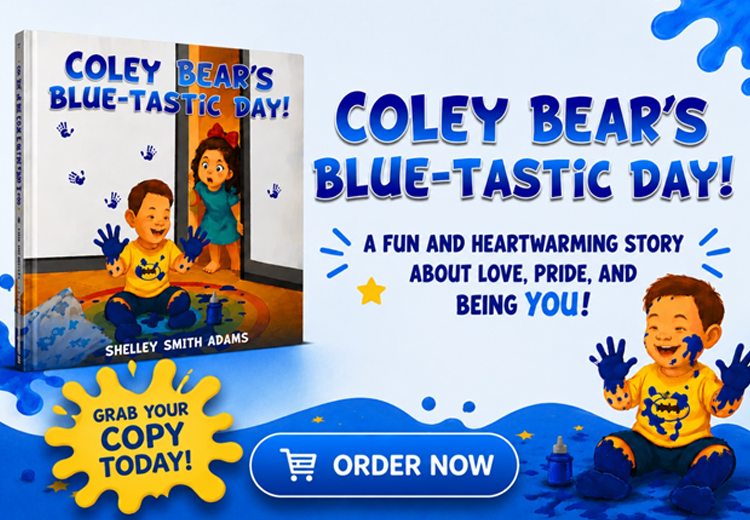

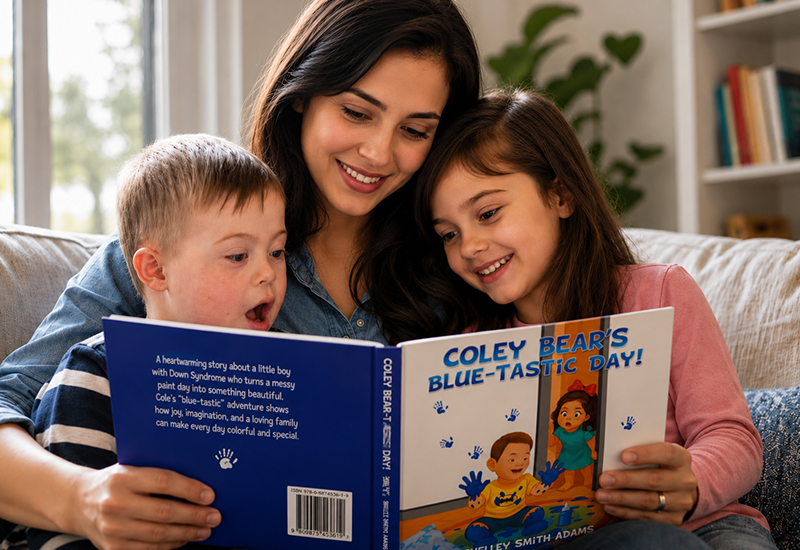
A quiet morning, a curious child, and a bottle of blue fingerpaint can change everything. Within minutes, the sofa is splattered, little arms are streaked with color, and a mother walks into a scene that could bring frustration. But instead of anger, she chooses a smile. That is the heart of Coley Bear’s Blue-tastic Day! by Shelley Smith Adams, a true story about the author’s son, Cole, who has Down Syndrome and sees the world uniquely.
In an age when children are constantly rushed, finding meaningful educational stories that teach both patience and creativity has never been more important. These stories shape how children understand emotions, respond to surprises, and express imagination. When a child opens this book, they learn how to pause, explore, and turn a mistake into pride. The best kids educational stories leave room for mess, laughter, and love, exactly as this one does. Through Cole’s adventure, young readers discover that patience is choosing joy when things go wrong, and creativity is painting your own world.
Why Kids Educational Stories Matter for Child Development
Children learn best through stories. Unlike direct instructions or repeated warnings, a well-told story enters a child’s heart and stays there. When a child reads about a character who makes a choice, faces a consequence, and experiences an emotion, that child internalizes the lesson without feeling lectured. This is why educational stories are such powerful tools for parents and teachers. They build emotional vocabulary, teach cause and effect, and encourage empathy.
In Coley Bear’s Blue-tastic Day!, children see Cole make a series of choices, tiptoeing to the craft cabinet, choosing blue paint, dipping one finger, then two, then his whole hand. They see his sister Ryleigh’s surprise and his mother’s pause. None of these moments is explained with a moral at the end. Instead, the story allows children to feel the suspense, the joy, and the relief themselves. That is the magic of educational stories for kids. They create a safe space where children can explore actions and reactions, learn that mistakes are not disasters, and that creativity often looks like a mess before it looks like a masterpiece.
The Benefits of Educational Stories for Children
When a child reads Coley Bear’s Blue-tastic Day!, multiple benefits occur at once. Language skills improve as children hear new words. Emotional regulation grows as they identify with Cole’s surprise and pride. Social understanding deepens as they observe how Cole, Ryleigh, and Mom interact. No one yells or mocks. Each character responds with patience and love, modeling healthy family dynamics. The book teaches that impulses like Cole’s desire to paint are not bad; they just need guidance. It never shames Cole’s creativity. Instead, it celebrates his pride while gently suggesting painting on paper next time. That balance is rare and valuable.
Understanding Educational Stories and Their Impact
Young parents and educators often wonder what makes a story truly educational. The answer lies not in obvious moral lessons, but in how a story allows children to feel, observe, and connect. Below are four common questions about educational stories, using Coley Bear’s Blue-tastic Day! as a living example:
1. What are the benefits of educational stories for kids?
They build emotional intelligence and teach cause-and-effect. In Coley Bear’s Blue-tastic Day!, children learn that joy and mess can coexist while family love remains steady.
2. How do stories teach patience to children?
Stories show characters pausing and controlling impulses. Cole paints step by step while his mother freezes before responding, teaching that patience is a conscious choice.
3. What are educational stories for kids about patience?
They feature characters who handle delays calmly. This book shows patience from multiple angles: Cole’s careful process, Mom’s paused reaction, and Ryleigh’s gentle waiting.
4. Why are creative stories important for kids?
They encourage problem-solving and self-expression. Cole uses his body as a canvas, teaching children that there is no single right way to express an idea.
How Coley Bear’s Blue-tastic Day Teaches Patience
The book teaches patience not through lectures but through small, powerful moments. Cole tiptoes instead of running. His mother pauses before reacting. Ryleigh waits without rushing. Each character shows that patience is a choice, not just sitting still. These quiet actions speak louder than any moral lesson. Some examples are given below:
1. Kids Educational Stories Show Patience Through Action
Telling a child “be patient” means little. Showing a character who tiptoes, dips one finger at a time, and waits for a reaction is powerful. Cole does not rush. Each deliberate step, from opening paint to smoothing it on his arms, shows joyful, unhurried exploration.
2. Mom’s Pause as a Patience Lesson
When Mom sees the blue mess, she freezes for a minute. She could yell or cry. Instead, she waits, looks at Cole’s proud face, and chooses her response carefully. That pause is patience in its purest form. Young readers learn that even adults need to breathe before reacting.
3. Ryleigh’s Gentle Guidance
Ryleigh also demonstrates patience. She does not grab the paint away or scold her brother. She waits for Mom’s response. Later, when Cole asks, “Good job?” she smiles and says, “Yes, Cole, you did a good job, but maybe next time, let’s paint on paper!” Her patience is kind and constructive. She corrects without shaming.
How Coley Bear’s Blue-tastic Day Teaches Creativity
Creativity in this book is not about following rules. It is about seeing possibilities others miss. Cole uses his body as a canvas. His mother celebrates his pride. The mess becomes music. The lessons are clear:
1. Creative Thinking Stories for Children Encourage Exploration
Cole watches a cartoon character paint. He does not think, “I need paper.” He thinks, “I want to paint too,” and becomes the canvas. He breaks rules not to be naughty, but because his imagination works differently. His creativity is joyful, messy, and completely valid.
2. Turning Mess into Art
The book teaches that mess is not creativity’s enemy. “Drip. Smear. SPLAT!” and “bluer and bluer” turn the chaos into music. Children giggle at the sounds and learn that making something beautiful often means getting messy first. Failure becomes excitement about the process.
3. Pride in Creation
Cole yells, “Blue!” and Mom confirms, “Blue, you got the color right!” His creativity is not dismissed. His color identification is celebrated. He proudly shows off his artwork, and his family honors that pride. Effort, not perfection, matters most.
Real-Life Inspiration Behind the Book
This book is not fictional. It is dedicated to the author’s son, Cole, who has Down Syndrome and sees the world in a wonderfully unique way. Knowing this adds a deeper layer of meaning to every page. Shelley Smith Adams wrote this story not as a lesson for other parents, but as a love letter to her own child. This authenticity shines through. Cole’s joy is real. His mother’s choice to smile instead of cry is real. For families raising children who think differently or develop at their own pace, this book is a gift. It reminds parents that the mess is temporary, but the memory of being celebrated lasts forever. This is truly the best family love book, one that shows love not as perfection, but as presence.
A Lesson for Parents and Teachers
Adults who read Coley Bear’s Blue-tastic Day! often find themselves learning alongside them. The book challenges the instinct to prioritize clean sofas over happy children. It asks parents to pause, breathe, and see the world through Cole’s eyes. Teachers can use this book to start classroom conversations about emotions, choices, and family dynamics. It fits perfectly within family stories about childhood discovery because it captures a moment of exploration, mistake, and unconditional love. Every time an adult reads this book aloud, they are telling a child, “Your creativity matters more than my convenience.”
Conclusion
In a world that often rushes children toward worksheets, schedules, and perfect outcomes, Coley Bear’s Blue-tastic Day! stands as a joyful reminder of what truly matters. Kids educational stories like this one teach patience not through lectures, but through pauses. They teach creativity not through templates, but through blue fingerprints on little arms. Cole’s story is simple: a boy, some paint, and a loving family. But its impact is deep. Children who read this book learn that it is okay to make a mess, that waiting can be kind, and that pride belongs to the creator, no matter the canvas. Parents learn that a frozen moment of patience can change everything. So go ahead, let the paint out, watch the mess happen, and choose joy. After all, some of the best lessons come in blue-tastic packages.